
There are many reasons for the cracks in the concrete, but the list is the fact of using low-quality material, as well as the question of not calculating the loads properly. However, sooner or later all concrete begins to present fissures, which in some cases constitute a structural risk, and in others it is only a bad appearance.
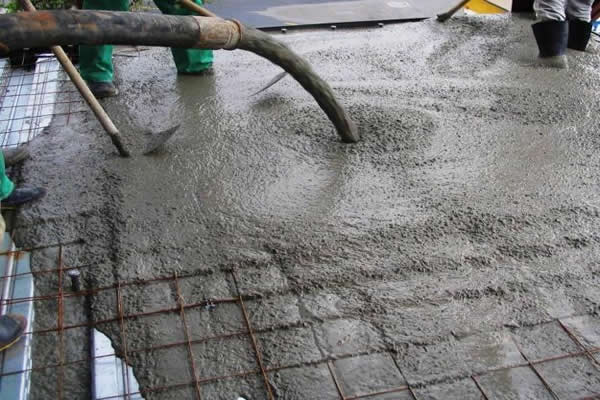
Thinking about this, a professor and researcher at the Technical University of Delft (Holland), Henk Jonkers, has developed a concrete that can be fixed by the action of certain bacteria, once water is added. I must point out that this is not the first time that the idea arises, but this specific concrete has several advantages over others that have emerged for the same purpose.
The secret of this new Bioconcrete lies in the addition of capsules of calcium-lactate bacilli. It is not specified but I assume that these capsules are contained in the cement, which is the main component of the concrete. Bacilli can live in the alkaline environment of concrete, without water, without oxygen and without any food, because they remain in latency even for years.
To activate the bacilli must add water, and then begin to feed on the calcium lactate, carrying out a chemical reaction that ends up producing limestone, material that in theory would fill the fissures of concrete. However, this product is expected to be commercially available soon, but there are still some unclear issues.
First of all, if the bacilli are activated with the water then what will happen when it rains? It is also necessary to mention the maximum width of the fissures that can be repaired with this method. And finally, how long can the concrete autoreparse? Well, surely the number of bacilli will have its limitations. At the same time, the subject is interesting.
Via | Delf University of Technology.
# Concrete Pipe # construction # repairing # Bioconcrete
ShareJUN
Sobre el autor: